

Selecting the right electrical enclosure for your needs can be tough, especially when the standards are so confusingly similar. For example, the primary source of electrical enclosure standards – NEMA Enclosure Types – contains six unique “type 3” ratings: type 3, type 3R, type 3S, type 3X, type 3RX, and type 3SX. …

Do you know the environmental hazards your enclosure will face? Although you don’t need to pinpoint the exact perils of the environment, you do need to make an approximation. The National Electrical Manufacturers Association (NEMA) can assist you with this goal through its standards for electrical enclosures. Over a dozen standards exist, …
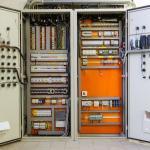
Electrical enclosures can vary dramatically in size, structure, material, and design. Although they share some common objectives – to protect the enclosed electrical equipment from the environment, to protect users of the equipment from electrical shock, and to mount electrical equipment – they can differ tremendously. As such, the requirements for electrical enclosures …

We’ve come a long way since the homing pigeons of Ancient Rome, the beacons of the Middle Ages, and the electrical telegraph of the 1800s. These days, the telecommunications industry makes long-distance communication possible through cables, signaling, layered networks, multiplexing, cellular telephony, wireless transmission, broadcasting, and much more. A century ago, this …
According to Oxford Dictionaries, an enclosure is “an artificial or natural barrier that seals off an area.” Enclosures house and protect a variety of products and items, though electronics are perhaps their most common contents. For example, computers, instruments, pushbuttons, and remote controls are typically contained within an enclosure for protection and …

A standard product fits a standard application. But what if you need a product with a very specific size, design feature, or material? In these situations, customization is crucial. With custom design services, you can modify a standard product to create a new product that matches your specific requirements. Many projects …

Indoors and outdoors, large and small, standard and customized, metal electrical enclosures suit a wide range of applications. These sturdy, reliable products are designed to protect their vulnerable contents from hazardous surroundings. In addition, they sometimes protect people from their electrical contents. To fulfill their pivotal purpose, most enclosures utilize …

Different applications require different electrical enclosures. Where will your enclosure be located? What elements will it confront? What products will it be housing? Are you concerned about moisture, wind, complete submersion, and/or dust? To better understand how various electrical enclosures will perform in the line of duty, explore the electrical enclosure …

Electrical enclosures are designed to withstand a variety of environmental concerns and application requirements. So when an enclosure is built to safeguard heat-sensitive equipment and it is located in a toasty environment, a cooling system is vital. A variety of enclosure cooling systems are available these days, and they can …

Electrical equipment cannot be kept just anywhere. Whether large or small, inside or outside, telecommunications paraphernalia or battery backup, electrical equipment must be carefully stored to protect the equipment, the environment, and any people involved in the operation. The shielding, more commonly known as an electrical enclosure, must have certain features and …